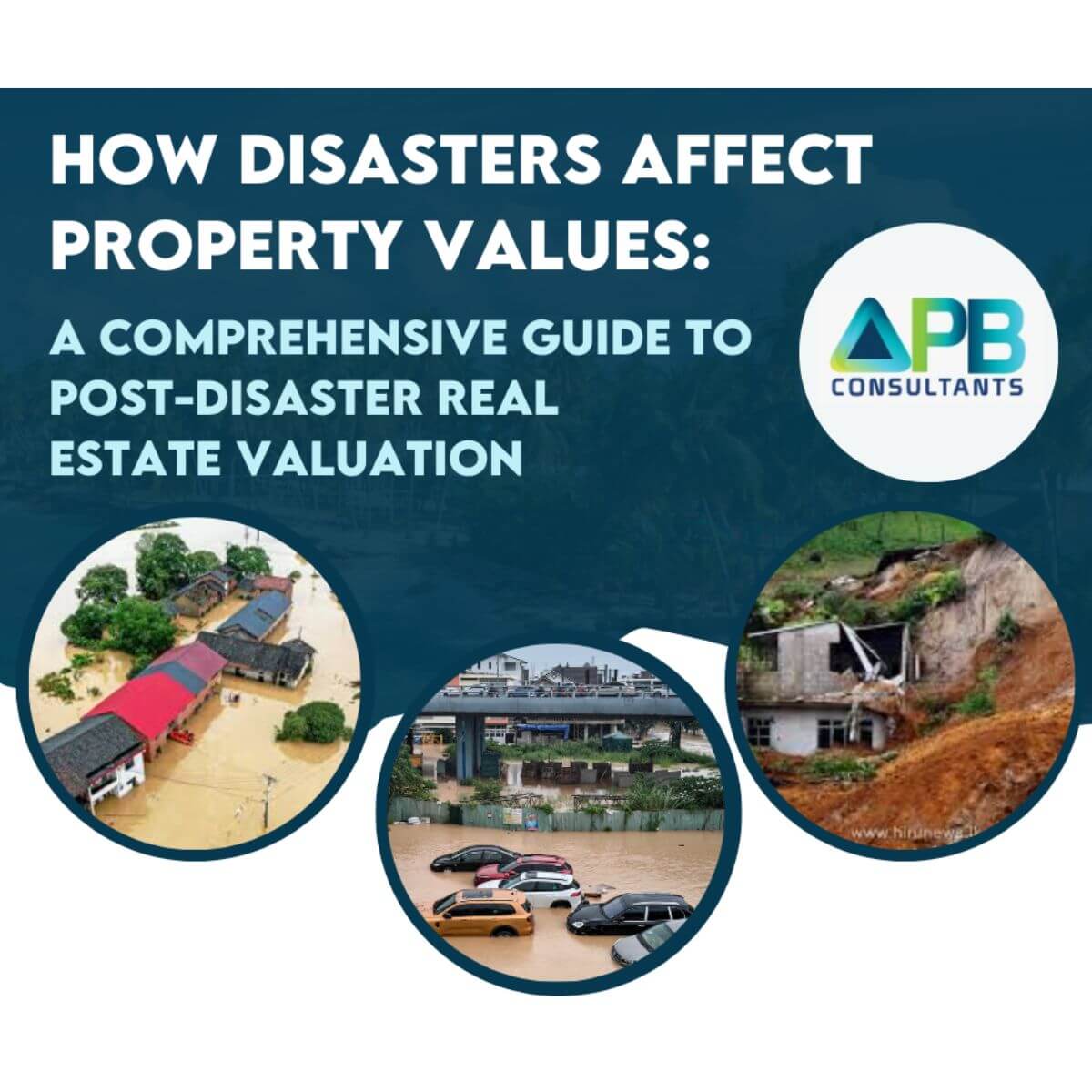
Valuing real estate after a natural disaster is far more complex than a standard appraisal. Hurricanes, floods, earthquakes, fires, or man-made events can distort normal market conditions, making traditional valuation techniques insufficient on their own. After a disaster, markets slow, costs surge, risks become more visible, and buyer behaviour shifts dramatically.
For insurers, lenders, government bodies, and property owners, a transparent and defensible valuation methodology becomes essential.
This blog outlines the key approaches used to assess property value after a disaster and explains why a multi-method framework delivers the most reliable results.
1. Initial Damage Assessment
The process begins with an objective assessment of physical damage. Appraisers collaborate with engineers, architects, and environmental specialists to document:
- Structural failures
- Environmental contamination
- Health and safety hazards
Drone imaging, satellite data, and lidar are increasingly used to capture inaccessible areas and quantify landscape changes.
Accurate valuation relies on an evidence-based understanding of the property’s condition (Brown & Patel, 2022).
2. Market Comparison Approach (Sales Approach)
Ordinarily, comparable sales (comps) form the core of valuation. After a disaster, however:
- Transaction volumes drop
- Buyer confidence fluctuates
- Market pricing becomes unstable
To adjust, appraisers use paired sales analysis, comparing damaged properties with similar undamaged ones. This isolates the portion of value loss caused specifically by the disaster.
It also captures stigma effects—where buyers remain hesitant due to perceived future risk (Harris, 2021).
3. Cost Approach
The cost approach is vital in disaster settings because it calculates what it would cost to repair or rebuild. It distinguishes between:
- Curable deterioration – repairable damage
- Incurable deterioration – major structural loss
- External obsolescence – zoning changes, neighbourhood decline, new risk classifications
Reconstruction costs often spike after a disaster due to supply shortages and labour constraints. Accurate costing requires real-time contractor quotes and updated building code requirements (Lee & Armitage, 2020).
4. Income Approach
For income-producing assets—commercial buildings, rental homes, industrial facilities—the income approach examines changes in revenue potential. Analysts adjust for:
- Lost rental income during repairs
- Higher vacancy rates
- Increased insurance and operating costs
- Shifts in tenant or investor risk perception
Adjusted cash flow modelling helps determine both short-term losses and long-term changes in investment performance (Gonzales, 2019).
5. Risk and Stigma Adjustment
Even after repairs are completed, many properties experience permanent or long-term stigma. Buyers may worry about:
- Future flooding
- Soil instability
- Recurring fires
- Structural vulnerability
Appraisers evaluate stigma through market surveys, historical case comparisons, and sales data from previously damaged properties. Updated hazard maps or high-risk zoning can also reduce buyer demand and raise insurance costs, directly lowering property value (Harris, 2021).
6. Integrated Multi-Method Valuation
No single valuation method is adequate after a disaster. Best practice combines the sales, cost, and income approaches:
- Residential – sales + cost
- Commercial – income modelling + sales
- Agricultural/rural – environmental/soil productivity analysis
A multi-method strategy improves transparency, reduces appraisal bias, and enhances credibility for insurance, litigation, or government compensation.
7. Importance of Transparency and Documentation
Because post-disaster valuations have legal, financial, and public-policy implications, documentation must be meticulous. Appraisers must:
- Explain assumptions
- Cite supporting data
- Describe methodologies clearly
- Provide defensible rationale for adjustments
Clear documentation builds trust and ensures valuations stand up to review.
Conclusion
Valuing disaster-affected property requires more than standard appraisal practices. It demands a data-driven, multi-disciplinary approach that considers physical damage, market disruption, income loss, and long-term risk perception. A blended methodology—supported by transparent reporting—ensures accurate, fair, and defensible valuations that aid recovery and guide future resilience planning.
References
- Brown, T., & Patel, S. (2022). Structural Assessment in Post-Disaster Environments. Built Environment Review.
- Gonzales, M. (2019). Income Modelling for Disaster-Impacted Properties. Journal of Property Finance.
- Harris, L. (2021). Market Volatility and Stigma Effects After Natural Disasters. Real Estate Economics Journal.
- Lee, R., & Armitage, D. (2020). Cost Estimation Practices in Post-Disaster Reconstruction. Construction Economics Quarterly.